Dasa Maha Vidya
-Santhipriya
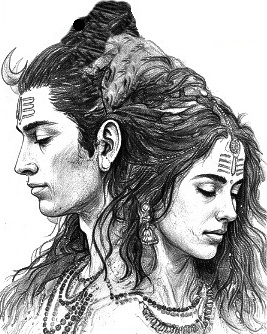
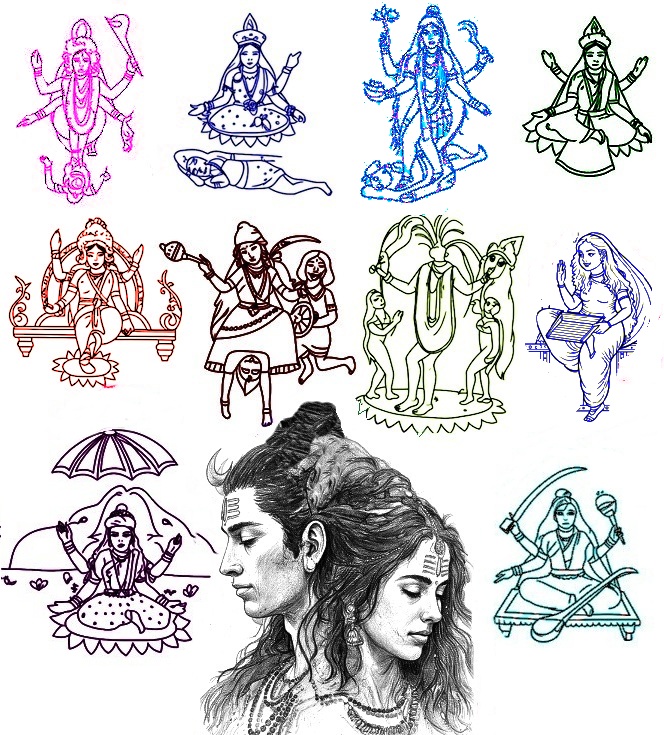
The Dasa Maha Vidya refer to the ten divine forms and appearances of Goddess Parvathi. They are also known as the ‘ten great wisdoms’. Each Maha Vidya form is the primordial power of Goddess Parvati and has different characteristics. Why did she appear in ten Maha Vidya avatars? There is a story behind it.
When Goddess Parvathi was in the avatar (incarnation) of Goddess Sati, she learned from Narad Muni about a yajna being performed by her father Dakshya. Dakshya deliberately did not invite his daughter and son-in-law to the function. Therefore, Goddess Sati sought permission from Lord Shiva to attend the yajna, saying that a daughter need no invitation from her father to attend sacred rituals. However, Lord Shiva objected to it saying that since her father deliberately did not invite them to insult him (Lord Shiva), neither he will attend, nor will he agree to Goddess Sati attending the yagya.
Goddess Sati became furious, she thought that Lord Shiva was dominating her in every issue and not treating her equal or as the mother of the Universe. Anger on fire she unleashed ten cosmic powers in the name of ten Maha Vidyas, each one of them blocked one of the ten directions (the four cardinal and four inter cardinal directions, plus above and below), surrounding Lord Shiva, preventing any movement, thus, compelling him to grant her permission to go to the yagya; perplexed Lord Shiva had no option but to accord permission to Goddess Sati to go to her parents’ home. Sati proceeded ahead to attend the sacrificial ritual.
Subsequently all the ten shadow forms which Goddess Parvathi unleashed to terrorize Lord Shiva, manifested in different periods of time from the same Goddess Adi Parasakthi in the same form to help the feminine divines who fought battles with asuric forces to save the celestials and the mankind.
The reason why Goddess Parvati manifested her power in ten terrifying and peaceful forms in Maha Vidya is to show to the universe that she too enjoins independent divine power; like how Lord has several divines within him, she too is encompassed with several feminine divines within her. One other reason was to show to the universe that unless male-female energy gets activated together, the universe along with the creature created will not get energized. As said earlier those shadow female goddesses were allowed to manifest in the same form and energy to destroy demons and asuras in many battles waged by various feminine divines.
The essence of Goddess Parvati’s primordial power – ten different characteristics – was embodied in each of the Maha Vidyas. The name Maha Vidya comes from the Sanskrit word- Maha means great and Vidya, meaning wisdom, knowledge, manifestation or revelation.
These goddesses are worshipped by Tantric Sadhakas for spiritual development and self-realization, as Dasa Maha Vidya represent different aspects of divine energy and wisdom. The ten Maha Vidyas are
• Goddess Kali
• Goddess Tara Devi
• Goddess Tripura Sundari (Shodashi)
• Goddess Bhuvaneshwari
• Goddess Bhairavi Devi
• Goddess Chhinnamasta
• Goddess Dhumavati
• Goddess Bagalamukhi
• Goddess Matangi and
• Goddess Kamala
These ten goddesses should be invoked only through proper chant of the mantra syllables to derive tantric siddhis. Besides, only when one worship them properly in the procedure prescribed for each, they will receive desired siddhis in their life, however, if some one attempt to invoke these goddesses performing Yantra pujas on their own without getting initiated from a proper guru, then it will spell devastating effect in one’s life and may even endanger their life, since some of the goddesses in Maha Vidya are highly aggressive in nature. One should also not keep the pictures of Dasa Maha Devis photos in their pooja room in casual manner; they need daily worship in a set pattern prescribed in the vedic texts. The worship of the Dasa Maha devis require everyday purification of one’s self, adhere to certain rituals necessary etc. Therefore, the spiritual masters always advise that they be worshipped only in the sanctified temples. Never attempt to perform to the Yanthra of Dasa Maha Devis by merely reading books .
Goddess Kali
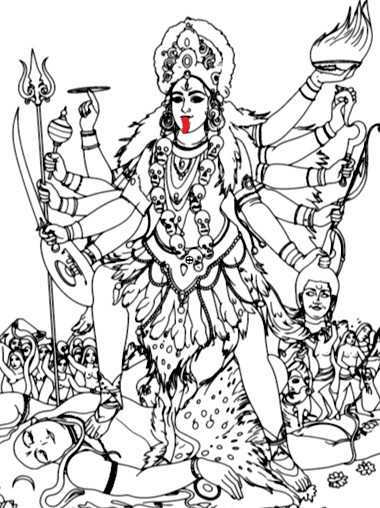
Though Goddess Kali emanated as the shadow of form of Goddess Parvathi to terrorize Lord Shiva, Goddess Kali was subsequently allowed to retain the same form and appearance and manifest again from her or from one of her incarnates at an appropriate time much later. In sink with it she manifests during the war waged by Goddess Durga who was incarnate of Goddess Parvathi.
The story line goes like this on the manifestation of Goddess Kali. According to Markandeya Purana (250-550 CE) Goddess Kali embodiment of supreme feminine energy (Shakti) was created from Goddess Ambika (Goddess Ambika and Goddess Durga are essentially the same, as Ambika is one of the many names and forms of the supreme Goddess Durga) to slay the demon Raktabija. An asura namely Raktabija were tormenting the celestial forces and caused sleepless nights to them by way of torturing them in several ways.
When the celestials ran to Goddess Parvathi and sought protection from her, unable to see the plight of the celestials, she created a goddess namely Ambika from her body and sent her to destroy the asuras and end the misery of the celestials. When the asura fought against Goddess Ambika, two in the asuric forces namely Shumba and Nishumbha, were enchanted by her beauty and attempted to catch her to take her into their possession. Angered by their indecent act, Goddess Ambika instantly turned her appearance to that of a fierce form, Goddess Durga and created Goddess Kali from her anger to annihilate them. Goddess Kali took fierce and aggressive form, fought with all the asuras and killed them, and also drank their blood.
After defeating the demons (such as Raktabija), Kali is in a blood lust rage, began to dance wild threatening the cosmos with destruction; she danced in ecstasy along with Lord Shiva unaware that she was dancing with the Lord. When she calmed down and came to her senses, she felt ashamed of her act and bit her tongue unknowingly which caused blood to flow from the bitten tongue, hence she appears as tongue protruded, blood dropping from the bitten tongue.
The same story is also told in a slightly different version. Goddess Kali, who killed the demons and drank their blood, danced in ecstasy after destroying them in the battle and in vanity disrespected Lord Shiva while dancing. In order to tame her and destroy her arrogance, Lord Shiva challenged her dancing, performed Tandava dance, culminating in Lord Shiva defeating her through a clever dance pose. Goddess Kali came to her senses and sought his forgiveness accepting defeat; her arrogance vanished. That is how the fearsome Goddess Kali became gentle Kali.
Goddess Kali dark in complexion, has a severed demon head in her hand with a protruding tongue dropping blood; wears garlands of skulls and has a terrifying appearance. But to those who worship her find her to be very kind and benevolent, bestowing happiness. This is one of the reasons why Goddess Kali is an important goddess worshipped during Navaratri festival. Goddess Kali is the ultimate expression of nature, both destructive and benevolent. She protects her people against evil by doing what others cannot while protecting those whom she loves. Goddess Kali embodies the power of creation and destruction in one entity. She transcends good and evil. Goddess Kali is mother nature, primordial, nurturing, creating, and devouring all at once, always protecting her children from harm.
Worshiping Goddess Kali, a significant manifestation of Maha Vidya Shakti through a Yanthra chanting mantras specific to her, should be done carefully by the sadhakas who had taken initiation from a proper guru who is well versed in such modes of worship since the intensity of the divine energies of the Goddess released during the worship will be very powerful to handle. Guidance from a guru is therefore essential to ensure that such worship or practices are performed correctly, safely, and as per the norms prescribed for her worship with the right intention aimed for spiritual progress, lest it will cause potential pitfalls.
Goddess Tara
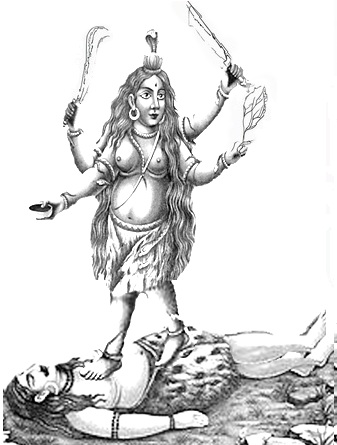
Though Goddess Tara emanated as the shadow of form of Goddess Parvathi to terrorize Lord Shiva, Goddess Tara was subsequently allowed to retain the same form and appearance and manifest again either from her directly or from one of her incarnates at an appropriate time much later. In sink with it she manifests when Lord Shiva swallowed dreaded poison Ala Kala.
The second Goddess in the Dasa Maha Vidya is Goddess Tara. She, the second wisdom Goddess appeared from the third eye of Maha Shakti. In Sanskrit Tara means star. The legend on her goes like this. When the Celestial forces and asuras churned the ocean to extract nectar, a dreaded the poison called Ala Kala Poison came out of it. Lord Shiva realizing that the poison would destroy everyone, quickly took it and swallowed to save the celestials. But by the intervention of Goddess Parvati, the poison did not go down into his stomach and stayed struck in his throat. It caused much suffering to Lord Shiva, who could not even eat anything. Maa Tara kept Lord Shiva on her lap and fed him her milk from the breasts. When she suckled him, the milk from her breasts counteracted the effects of the poison, and Lord Shiva recovered.
Goddess Tara is seen dressed in minimal clothes, a tiger skin covering her body, a garland of severed human heads hangs from the neck and blood bleeding from her mouth. Goddess Tara has four hands. She is seen holding a sword in one hand, a lotus flower in the other, something like a cutting blade in the third, and a pot carried by the mendicants in the fourth.
The cutting blade represents wiping away one’s unwanted habits and show him the peak in spiritual path. The posture of Lord Shiva, below her feet, represents her ability to control the minds of those who surrender to her.
Goddess Tara though appears to be fearsome; she is in fact a very benevolent Goddess like Goddess Kali. She bestows wisdom; she is guru of Lord Brihaspati who is the ruler of planets. She has four forms. They are:
• Goddess Lakshmi,
• Ugra Tara,
• Maha Ugra Tara and
• Neela Saraswati.
Lord Maha Kala Bhairava himself revealed to Goddess Tara the secrets of Nila Tara Tantra and taught her the relevant mantras for the same. Maha Vidya has an Yanthra of the same.
The Tara Devi temple is one of the Sakthi peedas, about 250 km from Kolkata. One can see the statue of Lord Shiva lying like a child on the lap of Goddess Tara . It is believed that Goddess Tara’s worship began in this Peeda before 5000 years. There is another story on how her temple came up in Himachal Pradesh. One of the kings who ruled the erstwhile Bengal (now West Bengal) when went on hunting spree in Himachal Pradesh, he fell asleep in a forest and when woke up, he realized that he had lost the way.
In his dream Lord Bhairava, Lord Hanuman and Goddess Tara appeared and directed him to build a temple for Goddess Tara in Himachal Pradesh; when he agreed he quickly recollected the way to reach back to his palace. Therefore, he built a temple for Goddess Tara in Himachal Pradesh. Both those temples – in West Bengal and Himachal Pradesh- are considered important among the Tara Devi temples.
Goddess Tripurasundari
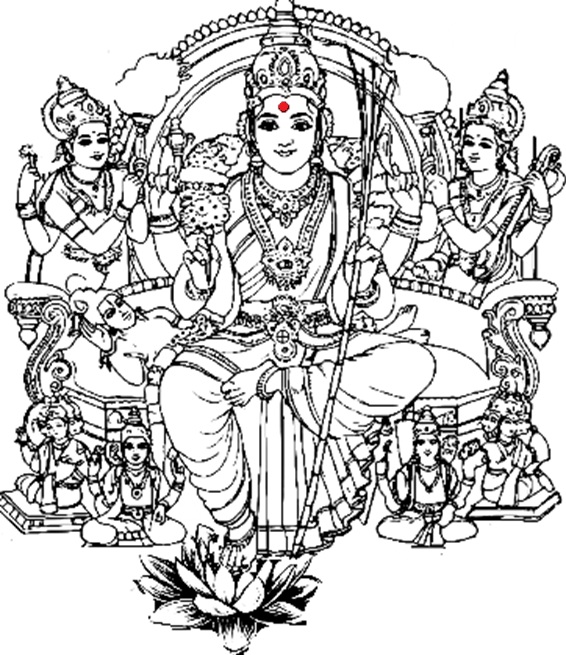
Though Goddess Tripurasundari too emanated as the shadow of form of Goddess Parvathi to terrorize Lord Shiva, Goddess Tripurasundari was subsequently allowed to retain the same form and appearance and manifest again either from her directly or from one of her incarnates at an appropriate time much later. In sink with it she manifests directly from Goddess Parvathi to annihilate an asura called Bandasura.
Lalita Tripurasundari or Shodashi is the third goddess in Dasa Maha Vidya. Two stories revolve around her incarnation. According to the first story, once, Lord Shiva burned Manmada to ashes when he disturbed his penance. The celestials offered apologies to Lord Shiva on behalf of Manmatha who was actually sent by them to disturb his penance.
Compassionate Lord restored back the life of Manmatha, but not before another asura called Bandasura emerged from the ashes. Bandasura penanced arduously and got rare boon from Lord Shiva himself. With the boon thus received he began to terrorize the celestials who in turn went to Goddess Parvati and sought her help to eliminate Bandasura. Hearing the humiliations faced by the celestials, Goddess Parvathi created Devi Tripurasundari from her body and killed asura Bandasura and saved the universe.
The second story goes thus. After Lord Shiva created Goddess Kali, he called her to come nearby by addressing her name as Kali, Kali, in front of everyone. Kali means black. Therefore, Goddess Kali felt humiliated thinking he was calling her as Kali because she appeared black; she therefore deserted him and went away to unknown place. When Lord Shiva failed to find her, he sought the help of Narad Maharishi and managed to trace her. Lord Shiva met Goddess Kali, explained his unintentional act in calling her as Kali and blessed her with the promise that she will appear in a beautiful form which none would have seen before. By the grace of Lord Shiva, she turned into sixteen-year-old, most beautiful Goddess in the name of Tripura Sundari.
Goddess Tripura Sundari lives in the Sri Chakra-shaped city of Sripuram in the middle of the ocean of nectar. Goddess Tripura Sundari holds a bow made of sugarcane in one of her four hands, a rope in the other, a noose in the third, and arrows made of five flowers in the fourth hand.
She is depicted seated on a lotus that rests on the supine body of Sadashiva also called Kameswara (Lord Shiva), who in turn lies on a throne whose legs are the gods Brahma, Vishnu, Isvara, and Rudra. She poses with beautiful eyes and a compassionate face. Goddesses Lakshmi and Saraswati are seen casting their veils around her besides Saptha Kannigas , few to mention in them Matangi, her minister, Ashwarooda, the captain of her cavalry, and Varahi, the commander of the army. There are many Yantras attributed to the hymns connected to her. Those hymns are called Lalitha Sahasranamavali.
Those who worship her regularly derive lots of benefits, besides begetting good health, prosperity and wealth. When offer prayers to Goddess Tripurasundari and worship her with pure devotion and open heart
• She help the sadhakas to reach higher consciousness and unity with the divine to achieve self realization.
• Unwanted obstracles caused by others in their life will get removed. She ensures it.
• One will be able to conquer themselves to achieve greater goals in life because self confidence is the first gateway to successes. She gives such moral courage and mental clarity,
• She offers protection against invisible enemies both within and outside.
• She ensures fostering of love and harmony amongst the family members .
Goddess Bhuvaneswari
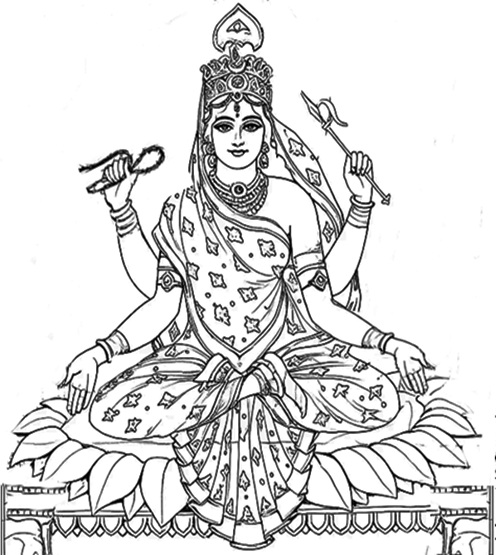
Though Goddess Bhuvaneswari too emanated as the shadow of form of Goddess Parvathi to terrorize Lord Shiva, Goddess Bhuvaneswari was subsequently allowed to retain the same form and appearance and manifest again. She manifested encompassing the divine energies of Goddess Lakshmi, Goddess Saraswathi and Goddess Parvathi through Goddess Adi Parasakthi as ruler of the Universe.
The fourth Goddess in Maha Vidhya has been Goddess Bhuvaneswari. Bhuvaneshwari is made up of two words -Bhuvanam and Ishwari. While the word Bhuvanam meant the universe, Ishwari represented feminine goddess. Thus, Goddess Bhuvaneshwari is regarded as the ruler of the universe who is Goddess Adi Parasakthi herself.
How did she manifest? The story line goes like this. After the universe was created by Goddess Adi Parasakthi, initially only Lord Moon and the Lord Sun were in the devaloga as created by her. The sages (who manifested followed by Lord Moon and Lord Sun) requested them to create the cosmos consisting of three layers of worlds along with creatures and they will also in turn get a planet for them (planets for Moon and Sun).
Acceding to their request when Lord Sun created the three world – Bhoo Log, Swarga Log and Nether Log, immediately Goddess Adi Parasakthi, as the ruler of those three worlds, transformed her into Goddess Bhuvaneswari, who in turn released three divine energies and converted them into three goddesses namely Goddess Lakshmi, Goddess Saraswathi and Goddess Parvathi. Thereafter encompassed with the three energies, Goddess Bhuvaneswari turned into the Goddess of Wisdom.
The holy Vedas hail her as Aditi, the infinite and all-encompassing mother, who holds the entire space in her cosmic womb. Thus, it is said that the universe itself is Goddess Bhuvaneswari and she herself is the universe since she pervades in both the living and non-living beings in the universe. Since everything emanated only from her divine energy, she is a power house, who can over rule the effects of even the mighty Navagrahas, the nine planets who decide ones’ destiny.
Goddess Bhuvaneswari too is a beauty queen in her own right like Goddess Tripurasundari; she is usually depicted with four hands; one holding a Noose (Pasangum), the second a Angusa (Goad) and with the remaining two hands she bestows blessings on her devotees. Sometimes, she is also seen having many hands, each of them holding different kinds of weapons; sometimes she is seen sitting naked, resting on a lotus flower.
She is also embodiment of love because she considers every living being in the universe her own children; she is merciful and kind. When pleased with sincere prayers she bestows generous blessings.
• Her love is not of the usual possessive kind, but is all pervasive that frees us from illusion, attachment and suffering.
• Worshiping her is believed to help one manifest self discipline and dissolve inner blockages.
• She is considered the goddess of abundance, prosperity, and success, and is also invoked for progeny and good fortune.
• Meditating on her is believed to awaken one’s creative potential.
Goddess Bhairavi
Though Goddess Bhairavi too emanated as the shadow of form of Goddess Parvathi to terrorize Lord Shiva, Goddess Bhairavi was subsequently allowed to retain the same form and appearance and manifest again. She manifested through Goddess Durga who waged war against asuras.
Goddess Bhairavi, one of the most terrifying aspects of Dasa Mahavidya is fifth in Dasa Maha Vidya; she is consort to Lord Bhairava, the fierce form of Lord Shiva, both of whom emerged during the Dakshya yagya. She is the Goddess who protects the ‘Tripura’, that is, the fort, the city, the town, meaning protector of Sri Chakrapuram of Goddess Lalithambigai. In Chandi Saptashati, the emanation of Goddess Goddess Bhairavi is given.
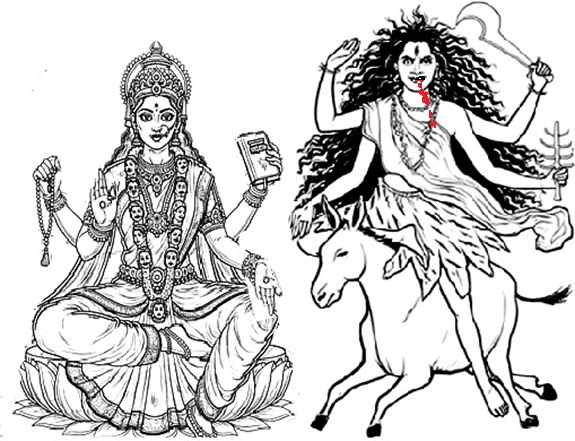
When the universe was threatened by asuric forces, Goddess Parvathi’s protection was sought by the harassed celestials. Angered over the pathetic state of the celestials, Goddess Parvathi created Goddess Durga to annihilate the asuras. In the battle waged by Goddess Durga, she was accompanied by many Mohini’s, Yoginis and Goddess Bhairavis, especially Goddess Kala Bhairavi as one amongst them. Goddess Bhairavi took the form of Chandi and killed two dreaded asuras namely Shumba and Nishumbha. In her another avatar as Chamunda, she assumed fearsome form and killed two other asuras namely Chanda and Munda and thus, earned the name Chamundeswari. In that avatar she appeared with oozing blood from her mouth and sitting atop a donkey.
Goddess Bhairavi is shown in two different forms and postures. In one of the iconography, Goddess Bhairavi is shown to resemble that of Goddess Parvati. In this representation Goddess Bhairavi shines with the effulgence of ten thousand rising suns, seated over a lotus flower. She is shown with four arms; in one arm she holds a book, referring to the one who bestow abundance wisdom and in the other rosary referring to administrator of the spiritual discipline. Two other arms display fear-dispelling and boon-conferring gestures such as Abhaya and Varada Mudra respectively. She wears red garments; a garland made up of skulls around her neck hanging till stomach. While she is shown seated over a lotus, in some iconography she is seen seated over a corpse, radiating a beauty so stunning that all who see her divine countenance are struck with awe and wonder. In some iconography she is shown as the one terrifying, ashes smeared all over her body, sitting in the cremation ground on top of a headless corpse.
While fierce, she is loving mother who showers unconditional love for all her children and can go to any limits to protect her devotees.
• She is seen as being capable of providing both spiritual enlightenment and worldly well-being for those who worship her.
• She dispels negative forces that try to curb spiritual growth.
• She is a significant deity in the world of Tantra and believed to have control over all three aspects of life: creation, maintenance, and destruction.
• She is worshipped to remove obstacles to spiritual growth.
• She is also invoked for blessings in martial relationships, ensure harmony in love and marriage; she is often associated with Goddess Kali and worshipped for getting rid of evil spirits.
• If one chant the specific mantra meant for her Yantra one lakh twenty-five thousand times, their desired goal will be achieved and they will gain several siddhis.
Worshiping Goddess Bhairavi is not recommended for everyone, just like worshiping any other tantric deities, as their practices are complex and difficult. Goddess Bhairavi represents triumph over sensual desires if a person wants to grow spiritually. Therefore, those who may try to curb the growth of spirituality attracts her wrath.
Goddess Chinnamasta
Though Goddess Chinnamasta too emanated as the shadow of form of Goddess Parvathi to terrorize Lord Shiva, in order to satiate the hunger of her guardian devathas, Goddess Parvathi turned herself into Goddess Chinnamasta and manifested in the universe.
In Dasa Maha Vidya, Goddess Chinnamasta is the sixth Goddess, whose appearance is also fearsome. Chinna in her name meant severed and masta meaning head, literally translates into the goddess with a severed head.
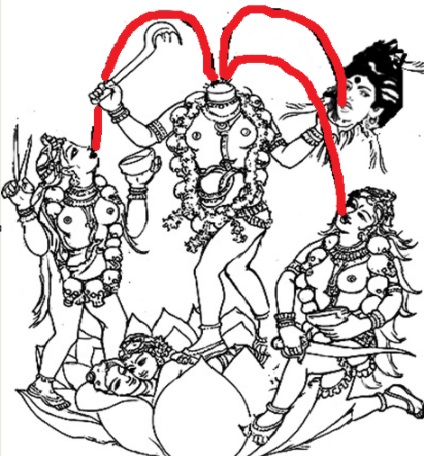
The first story of her manifestation goes like this. Once Goddess Parvathi in the form of Chinnamasta Devi went along with two of her attendants namely Jaya and Vijaya. While taking bath Goddess Parvathi’s mind corrupts and turns sensual. She emerged from the stream completely nude while engrossed in the act of submitting to Lord Shiva. Realizing her folly and to hide herself she converted herself into blackish in colour. Her two other attendants who too came out of the river in nude were feeling very hungry. In order to satiate their hunger, Goddess Parvathi sliced her own head, to cause three streams of blood flow out. The three jets of blood flowed from her neck entered into her own mouth on the severed head and into the mouths of her two attendants to satiate their hunger.
As per the second story, after killing a demon who was tormenting the celestials, Chinnamasta became bloodthirsty and chased them to the crematorium. She reached the crematorium where Cupid and Rati were lying in union; fully nude, Goddess Chinnamasta stood over them and danced in rage. While dancing in rage, she cut off her own head and allowed the blood to flow out from the severed neck, which not only her severed head drank, but also ensured two nude guardian deities present in the crematorium too drank them. Only thereafter the anger of Goddess Chinnamasta subsided.
One of the primary myths associated with Goddess Chinnamasta, which is the third story is detailed in a puranic text called Pranatoshini Tantra, an important Sanskrit scripture which covers creation of universe, stars, descriptions of the supreme being, mantras, yantras, and tantric practices for vitality and healing. This text has been written in the 19th century by one Jibananda Vidyasagar and published in the year 1898.
According to the tale contained in it, Goddess Parvati was once bathing in the sacred river along with two of her attendants namely Dakini and Varnini. After bathing, Parvati felt intense hunger and her complexion turned black due to the pangs of hunger. Her two attendants were also feeling hungry and searched for something to eat. In an act of self-sacrifice and compassion, Parvati transformed herself into fierce form called Goddess Chinnamasta, and severed her own head. Three streams of blood spurted from her severed neck: one stream was drunk by her own severed head, while the other two streams were drunk by her attendants thus satisfying their hunger.
Goddess Chinnamasta is often depicted in red or orange colour and in a fearsome form; she appears either standing or sitting, minimally clothed or nude, garland of skull around her neck hanging up till her waist; she is holding a severed head in one hand and a sword in the other.
The iconography shows her as standing on a copulating couple holding a severed head of her own on one hand who is seen drinking jet of blood spurt from the neck while two other females (attendants), also standing or kneeling beside her drinking the stream of blood flowing down from her severed neck. Generally, all are naked or only partially clothed. The two attendants either in sitting or standing position drink the stream of blood from her neck; they appear with matted hair, blueish grey or white or red in complexion.
What does they suggest?
• The severed head represents the three aspects – creation, protection and destruction
• The severed head also represents the annihilation of ones’ ignorance and illusions besides arrogance for attainment of spiritual liberation.
• Three females drinking the blood from the stream of blood flowed from the severed head indicates unity amongst them.
• The flowing blood represents the life force that sustains the universe.
• Standing nude and nourishing the attendants to drink blood from her severed neck indicate the compassion of the Goddess to the mankind. She thus demonstrates that those who offer sincere and genuine worship get their desire fulfilled.
• Goddess Chinnamasta is considered a symbol of selfless love, self-sacrifice and philanthropy.
• Nirvana (nudity) signifies a profound state of spiritual liberation; It involves the extinction of attachment over the body; since the soul of Goddess Parvati was in absolute sink only with Lord Shiva, the depiction of Goddess Parvathi, in nude and standing over some couple in union in the iconography can only be symbolic, representing a transcendence of material reality and physical attachment; she is unattached over the body which is just an empty vessel that holds one’s soul.
• Her posture in the crematorium demonstrates that she is beyond birth and death
Worshiping Goddess Chinnamasta through Yanthra is to be proceed cautiously with proper guidance and initiation from perfect Guru. Otherwise, it may give negative results.
However, when the Devi is worshipped for genuine cause with proper rituals and practices,
• Sadhakas consider Goddess Chinnamasta as the one who bless them overcome their ego and attachments to achieve spiritual liberation.
• the fear of enemies will disappear
• evil forces will not enter your home
• she will give what one desire provided it is fair and reasonable.
• Obstacles in life will get eliminated; one will get peace of mind.
The temple of Goddess Chinnamasta Devi is located in the Una district of Himachal Pradesh. The name of the temple is Sindh Purani Temple. The temple is one of the important Shakti Peet temples. The Goddess with no head in the temple is worshipped as Goddess Chinnamasta, incarnation of Goddess Durga.
Goddess Dhumavathi
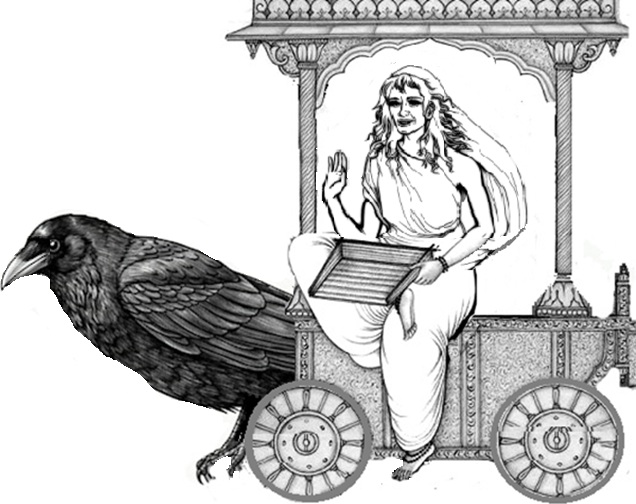
Though Goddess Dhumavathi too emanated as the shadow of form of Goddess Parvathi to terrorize Lord Shiva, retaining the same form and appearance Goddess Dhumavathi manifested from the smoke that arose from the burnt ashes of Goddess Sati .
In Dasa Maha Vidya Goddess Dhumavathi stands seventh in row. She is considered one of the ten great wisdom goddesses, a pantheon of deities associated with tantric traditions. Goddess Dhumavati is said to manifest herself at the time of cosmic dissolution called pralaya, and she is said to be the void that exists before creation.
Her iconography shows her as an aged widow with wrinkled and angry face; ugly looking; dark in complexion, possessing disheveled hair, wearing old clothes; wearing ornaments made of snakes ; dry breasts, crooked teeth; a winnowing fan in hand; mostly visits crematoriums and her divine vehicle is drawn by a crow.
In some iconography she is shown having four hands, while in others she is seen with only two hands, mostly sitting on a vehicle drawn by a crow. Where she is shown with four hands, she holds a spear or sword and a skull-cup in one hand, kapala in the other, a winnowing fan on the third and by the fourth blessing the sadhakas.
Two stories veer around her birth. According to the first story, after the dispute in Dakshya Yagya, Goddess Sati immolated herself into the fire. Once the fire extinguished and turned into ashes an angry female Goddess in the form of Goddess Dhumavati emerged from the smoke that arose from the burnt ashes of Goddess Sati embodied with sad and angry feelings of Goddess Sati. Since she she embodied the essence of Goddess Sati’s indignation and sorrow, she appeared as an inauspicious figure. Once emerged, she screamed that she was feeling very hungry and looked around to find only angry Lord Shiva standing there. Before he could say something, she simply swallowed him to appease her hunger. When Lord Shiva, from inside her stomach begged to be released, she released him and Lord Shiva survived. Once Lord Shiva came out, he cursed her to turn into a widow and remain so lifelong in the same inauspicious appearance.
Another puranic text the Pranatoshini Tantra which is a comprehensive ancient Hindu scripture supposedly written somewhere during 1821 CE by Shri Ramatoshan Bhattacharya and which contains Tantric rites, practices, sadhanas, relevant mantras for the worship of specific deities, have a different story to tell on the origin of Goddess Dhumavathi. It says, when Goddess Sati, the first wife of Lord Shiva, residing with Lord Shiva in Himalayas, once turned extremely hungry and asked him for food. When Shiva asked her to wait for some time, she became indignant and swallowed him to satiate her hunger. After Lord Shiva convinced her to release him from her stomach, she released him. Once Lord Shiva came out, he cursed her to assume the form of a widow.
The Prapanchasara Sarasangraha one of the key tantric texts with Sanskrit commentaries is generally attributed to Shri Adi Shankaracharya. It has the descriptions of Goddess Dhumavathi. It mentions her iconography thus : the dress which she wears is taken from the corpses in the cremation grounds; she constantly yearns for food and drink and is never satisfied; she is always hungry and thirsty; she likes to create conflict or quarrels and invokes fear; she is always terrifying in appearance. The goddess tends to be in a sad state of mind and is quarrelsome. Her eyes are fearsome, and her hands tremble.
Perhaps those observations may have compelled many possessing spiritual knowledge to consider her to be opposite to that of Lakshmi, the Goddess of wealth, hence, they termed her as Alakshmi. She is also considered an inauspicious Goddess, reason being her divine vehicle drawn by a crow. They associate her with poverty, decay, loneliness etc because she is mostly seen in cremation grounds seated over a crow.
On the other hand, those in the tantric traditions consider her to be a Goddess who is benevolent in granting boons,
• She dispels ignorance and bestow spiritual knowledge and wisdom.
• When worshipped she protects one from the negative forces, help them overcome disappointment and loss, and provide a deeper understanding of life’s challenges.
• She illustrates the inauspicious things to understand what is inauspiciousness and how to dispel negativity to gain auspiciousness.
• She grants immense wisdom, psychic power, and liberation by destroying inner enemies like lust, anger, and greed.
• those who have faced major set backs in their life if desired to burn those memories and enter into fresh lease of life if reach out to her with proper worship, they will definitely stand to gain as she will appear from smoke of fire in their life to guide them.
Unless one possess knowledge in both – inauspiciousness and auspiciousness – they can not decide the road map to follow in life. Therefore, when the entire divine forces manifested taught auspiciousness, which is the inner truths of life, some one has to show the folks of ordinary life the effects of being negative to forewarn the consequences if rightful path is not chosen; therefore, she has been chosen by Adi Parasakthi who manifested her to don the role of a teacher to teach the implications of what is imperfect, the disappointments, sorrows, humiliation, defeat, loss , loneliness, and all the negative parts in ones’ existence so that they may transcend it. Therefore, it is wrong to state worshiping her cause destruction in ones’ life.
Look carefully her symbolism.
• The winnowing fan indicates that she drives away imperfections in life and destroy the illusion.
• He appearance as widow is meant to teach, after certain stage in life, one should get freed of unwanted youthful desires and fantasies, remain detached, free themselves from lust and wordily desires to reach higher echelons of spirituality in life, which is essential for peaceful living in their rest of life and to attain salvation (Moksha).
Life is a voyage on the boat of life, through the ocean of samsara, which is often turbulent with full of joy, sorrow, and ups and downs, reflecting the inherent impermanence and challenges of earthly existence. However, the skilled boatman, who is none but divine, navigate the boat without letting it sink or get lost in the endless cycle. Since the divine navigate the boat on voyage, unconditional and complete surrender to him is important by leading a life of simplicity, and righteousness so that he will be present in our last journey to ensure a proper transition after death. Goddess Dhumavathi’s frequent visits to the crematoriums establishes this fact.
Goddess Bhagalamukhi
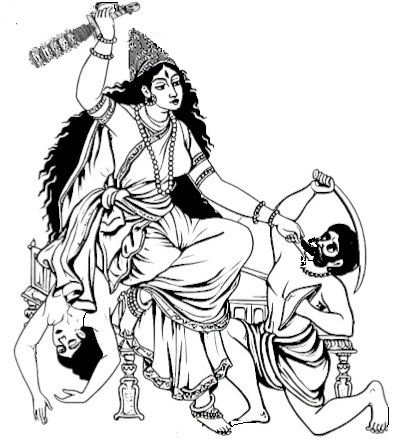
Though Goddess Bhagalamukhi too emanated as the shadow of form of Goddess Parvathi to terrorize Lord Shiva, retaining the same form and appearance Goddess Parvathi turned herself into Bhagalamukhi and manifested to annihilate an asura called Madan.
Goddess Bagalamukhi is eighth Goddess in Dasa Maha Vidya. She is a tantric deity worshipped to gain tantric powers and to reach higher stages in the path of emancipation.
Two stories revolve about her manifestation. Once an asura called Madan acquired a rare boon from Lord Shiva that each and all utterances of his will become the reality. The boon was called Vak Siddhi. Misusing the boon, he began to terrorize the celestials. When the celestials found that they could not stop his menace or overpower him and unable to bear his torture, they prayed to Goddess Parvathi to save them from the torture of the asura. As per Devi Mahatmya and Markandeya Purana, at the request of the celestials, Goddess Parvathi took the form of Goddess Bagalamukhi and promised to kill him. She suddenly appeared before him and before he could utter anything, she paralyzed his tongue, pulled it out in wink of an eye, immobilizing him from uttering anything. In the next moment she raised her club and beat him to death.
The second story is told in the form of folklore. once during the Sathya Yuga a terrific storm and deluge erupted in the sea of Saurashtra threatening to destroy entire creations in the Universe. When partial destruction began, unable to see the destruction of the universe, Lord Vishnu protector of the universe in a helpless situation went to an isolated location in Saurashtra region and sat in severe penance seeking Goddess Adi Parasakthi to save the humanity from getting destroyed. When he sat in penance, a huge ball of fire like flame rose from his navel, travelled upwards and merged with the light rays emitted by the stars and formed a flame over the sea in a place called Haridra Sarovara. A female deity clad in yellow dress appeared from the merged flame, appeared before Lord Vishnu to inform him that she was Goddess Bagalamukhi, manifestation of Adi Parasakthi who had sent her to save the mankind from destruction. Assuring him that she would end the fury of nature, she immediately absorbed the deluge in her and calmed down the storm.
The storm and furious turbulence which appeared in the sea calmed down saving the mankind from getting destructed. Lord Vishnu realized that it was indeed Goddess Parvathi who had emanated as Goddess Bagalamukhi from her energy and sent her to destroy the evil forces in the universe which caused destruction to the mankind.
According to one other legend which is heard in the temple of Bagalamukhi in a village called Nalgheda in the district of Ujjayini, in the state of Madhya Pradesh, during Mahabharata war, the Pandava brothers visited many tantric temples to gain yogic powers with magical properties to get back their lost pride and Kingdom. They visited this temple site (there was no temple at that time, only a stone was worshipped as Goddess Bhagalamukhi by the locals) to pray Goddess Bagalamukhi as advised by Lord Krishna who guided them to visit here.
Lord Krishna was an incarnate of Lord Mahavishnu due to whose prayers Goddess Bagalamukhi manifested in the universe. Heeding to the advice of Lord Krishna the Pandava brothers stayed here for several days praying to Goddess Bagalamukhi to help them restore their pride and power, which she bestowed. During their stay they constructed a temple for Goddess Bagalamukhi to allow her to settle here which became the tantric temple. It is the first and only exclusive tantric temple of Goddess Bagalamukhi in the world.
According to the spiritual pundits, she is portrayed as Goddess with three eyes suggesting that she is also embodiment of Lord Shiva (who is the only divine having three eyes) but appear in feminine form, golden in complexion and always appear in the midst of an ocean of nectar, with yellow champak flowers floating all around; the Goddess is seated on a golden throne with a crescent moon adorning her head gear while one of her hands is pulling the tongue of a demon. Her iconography shows her clad in yellow dress, wearing yellow-colored flowers and all the ornaments worn by her too were yellow in colour. Therefore, she is called Pithambari Devi by the devotees. While her name Baghla+Muki translates as crane face, she is not appearing as Goddess with crane face. She appears with beautiful face.
In some other iconography as seen in the temples, she is seen with three faces which represent Goddesses Parvathi, Lakshmi and Saraswathi thus revealing she is encompassed with Tri sakthi of those Goddesses.
Goddess Bagalamukhi is prayed by the tantric and sadhanathviks by performing rituals and chants of mantras and japa to get mystical powers to silence their opponents and defeat enemies’ acts. She is one of the Goddesses who when sincerely prayed and worshipped, bestows strength, power and confidence on her devotees and removes all kind of negative forces, evil eyes, obstacles both within and outside in their spiritual journey.
Worshiping in the manner prescribed for her gives
• protective shield around them from evils.
• financial troubles get resolved.
• Gives victory in disputes and litigations and restore lost reputation when they are genuine.
• Protects from slander and falsehood since she is believed to silence malicious tongues, remove defamation, restore social status and reputation unnecessarily lost if any.
• Strengthen the ability for decisive self control by enhancing will power.
• Dispelling fear and anxiety if caused by any malicious acts of others like black magic and sorcery.
Goddess Matangi
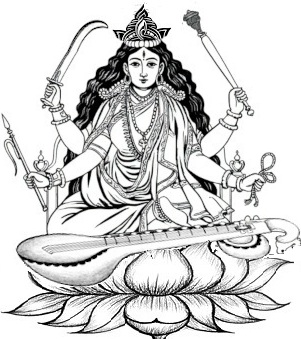
Though Goddess Matangi too emanated as the shadow of form of Goddess Parvathi to terrorize Lord Shiva, retaining the same form and appearance Goddess Mathangi manifested through a daughter of a Rishi named Matangi.
Goddess Matangi is the ninth of the ten Maha Vidya Goddesses. Like Goddess Saraswati, she governs speech, music, knowledge and other fine arts. Hence Goddess Matangi is called as Tantric Saraswati. She is a very aggressive Goddess as she is considered one of the manifestations like Goddess Kali the fierce form of Goddess Adi Para Shakti. Besides similar to Goddess Bagalamukhi, she is also combined form of Goddesses Lakshmi, Saraswati and Parvati. Matangi is also worshiped in different names such as Goddess Matangeshwari, Goddess Raja Matangi, Goddess Raja Shyamala, Goddess Madeshwari etc.
Her most popular form in the tantric tradition has been as Goddess Uchchhishta-Matangini. This Goddess is actually offered stale food with the left hand or unwashed hands, which is considered impure. It is a common practice in some of the tantric sects to worship Goddess Matangi with food left-over from their plates served with dirty hands.
Though she was also called as Chandalini, the Goddess of Chandals, the lower castes, when she assumes the form of Raja Matangi, she glows brilliantly and appears seated on a bejeweled throne, holding a parrot in one hand and veena on the second playing the cosmic tunes. Two other hands hold Veena instrument and showing abhaya mudra. She is portrayed with four hands in that form. A crescent moon crowns her head of long and wildly flowing hair and she seen seated on a blooming lotus.
In some iconography, Goddess Matangi is shown emerald green in complexion with four arms in which she holds a noose, sword, goad and a maze. The noose and the goad are the symbols showing controlling passions and ego. The maze and the sword represent her fierce aspects, always ready to severe the bondage of illusion with a swift movement.
In some other iconography, she is shown with six arms carrying a sugarcane, parrots, a book, besides the goad, noose and veena like Goddess Lalitha Tripurasundari or Goddess Madurai Meenakshi Amman. The music from Veena is said to carry the ability to transform, uplift, and awaken spiritual consciousness in the listeners.
Kubjika Upaniṣad, a text related to the great tantric Goddess of the same name refers Goddess Mathangi as a blue goddess with blue garments, perfumes, and ornaments, associated with blue parrots, representing the four Vedas in her four arms. Many scholars also say that Matangi is the goddess of the hunter tribes.
There are several legends associated with Goddess Matangi. Once, Lord Vishnu, Goddess Lakshmi, Lord Shiva and Goddess Parvati were taking food in a festival. While they were eating, some food from their hands spilled on the ground. A beautiful maiden arose from the spilled food and asked for their left-over food. The four deities gave her their left-overs as prasad and blessed her to turn into a Goddess and she instantly got the form of Goddess Mathangi.
In the second story which is told as folklore, Goddess Matangi was sister of Siva. She was always obsessed with purity and pollution. One day during a heated argument with Goddess Parvathi, when Goddess Mathangi spoke ill of Lord Shiva, Goddess Parvati got annoyed and cursed her to re-born as an out-caste woman. Saddened by her fate, when she approached her brother, he blessed that even though she will be born in the out-caste, she will also be worshipped by all classes of people with respect. In Nepal she is the most revered Goddess.
The third story goes like this. Once, Goddess Parvati wanted to go to her father’s house for few days. She asked Lord Shiva to accompany her. But he asked her to go first and then after some time he will join her. However, Lord Shiva could not stay away from her for a long time. So, one day he went to her father-in-law’s house in disguise of a merchant, did some business and in return he wanted her company for a day in exchange for money. Goddess Parvati though initially got annoyed and wanted to curse him, her inner sense stopped her from cursing as none will dare to ask for her company other than Lord Shiva. She understood that the merchant was none but Lord Shiva in disguise and therefore, promised to meet him alone one day and sent him back.
Then one day, she disguised herself as a Chandalini (a low caste woman) and went to meet him, but stood at a distance stating that she can not go near him, being a Chandalini. She sang and danced beautifully and attempted to attract Lord Shiva, however, clever Lord recognized her and played a trick. He said he too belonged to the clan of Chandal and therefore hugged her and laughed. He then told her that in order to be divine to everyone irrespective of the caste and clan, he allowed her to get born as daughter of a lower caste Rishi named Matangi and then marry him (Lord Shiva) in the form of Goddess Uchchhishta-Matangini to give recognition to the clan on par with others in the society. He thus established that the divines belonged to all castes without discrimination to any.
What the above divine play displayed was, the divine pervades everywhere irrespective of where one stayed and therefore, everyone born in the Universe are equal before God, there is no distinction like upper caste and lower caste to the divines.
Goddess Matangi bestow
• wisdom to those who seek Self-Realization.
• She is also the Goddess of music and learning and governs speech, music, knowledge and other fine arts. Worshiping her can help a devotee attain mastery over various art forms, including music, dance, and poetry.
• She bestow command over creativity, excellence in spoken word, and outward articulation of inner knowledge.
• Since she is considered the master Goddess for 64 forms of arts, she bestow that knowledge to the one who seek them from her.
• Unmindful of who one is, she always accepts the true devotion of her devotees and protect them against many impediments like, negative energies, marital discord, poor studies career loss, memory loss, stammering etc.
• Goddess Matangi is associated with spiritual evolution, liberation, and self-realization and therefore worshipped mostly by Sadhakas and those in tantric practices.
• Those who pray to her are protected against evil eye, black magic, and negative energies.
Kamalambika Devi
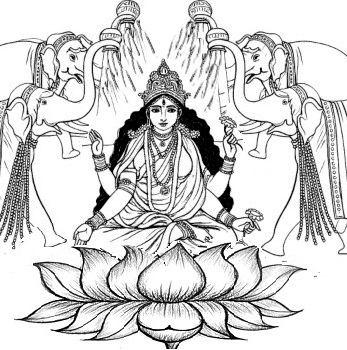
Though Goddess Kamalambika too emanated as the shadow of form of Goddess Parvathi to terrorize Lord Shiva, retaining the same form and appearance Goddess Kamalambika manifested through Goddess Parvathi.
Goddess Kamalambika is the tenth Goddess in Dasa Maha Vidya. Kamal means Lotus and she who sits on a Lotus flower is called Goddess Kamalambika. In many aspects she resembles to that of Goddess Lakshmi, but she is not Goddess Lakshmi. The difference between Goddess Kamalambika and Goddess Lakshmi is that Goddess Lakshmi shows herself pouring money from her hand, while Kamalambika does not do that.
The sadhanathviks say that the eyes of Goddess Kamalambika appear like a Lotus, when she smiles her face appears like a blooming Lotus; seated on a Lotus flower her overall appearance is like a blooming Lotus with grace and beauty as she is a Yogini. She is very calm and serene Goddess though she emanated as fierce form of Goddess Parvathi during Dakshya yagya to terrorize Lord Shiva. She’s a powerful, independent aspect of the Goddess Adi Parasakthi, focused on worldly fulfillment and spiritual grace, unlike the more submissive Lakshmi, and is key for Tantric practices seeking inner wealth and emancipation.
Not much is known on her manifestation except that she was emanated by Goddess Parvathi to terrorize Lord Shiva, when he refused to go with her to the Yagya performed by her father Dakshya. Those who worship her beget auspiciousness, power, wealth, luck, and supreme peace.
• she grants prosperity, spiritual abundance, wealth, good fortune, fertility, and fearlessness.
• In the form of Tantric Lakshmi, she bestows to her worshipers’ abundant spiritual power and mental strength to tread the path of spirituality which they desire -ultimate emancipation and freed of bonds.
• Her presence is considered extremely auspicious, as she is seated over a Lotus, symbolizing purity and innocence.
• She is worshipped for prosperity in life, family well-being, and good fortune. She is a gentle goddess; she is the beginning and the end.
Iconographically she is portrayed as shining in golden colour, having four hands; while two of them show Varada mudra granting boons and Abhaya mudra, removing fear, the other two hands have Lotus flower in them symbolizing prosperity-wealth and grains – to the seekers who pray to her. Her four arms represent four directions of creation. Generally, she is seated over a Lotus flower in the ocean of nectar, accompanied by two or four elephants. Those elephants sprinkle sacred nectar water on and off over her to keep her cool; several jewels adorn her body; she prefers to wear either Red or Pink coloured dress resembling to that of the colour of Lotus. The four elephants represent the four main human goals such as Righteousness (dharma), Wealth (Artha), Pleasure (Kama) and Home (Moksha) . Dharma is duty, righteousness; Artha is wealth- material gain; Kama is desires, pleasure; Moksha is liberation from the cycle of birth and death, freedom of consciousness. They are all interrelated.